

Foundation
Foundation Course
DURATION OF THE COURSE
9 MONTHS
HOURS OF LESSONS
476
EDUCATIONAL CREDITS
60
CITIES
ROME, MILAN, PADUA, BRESCIA
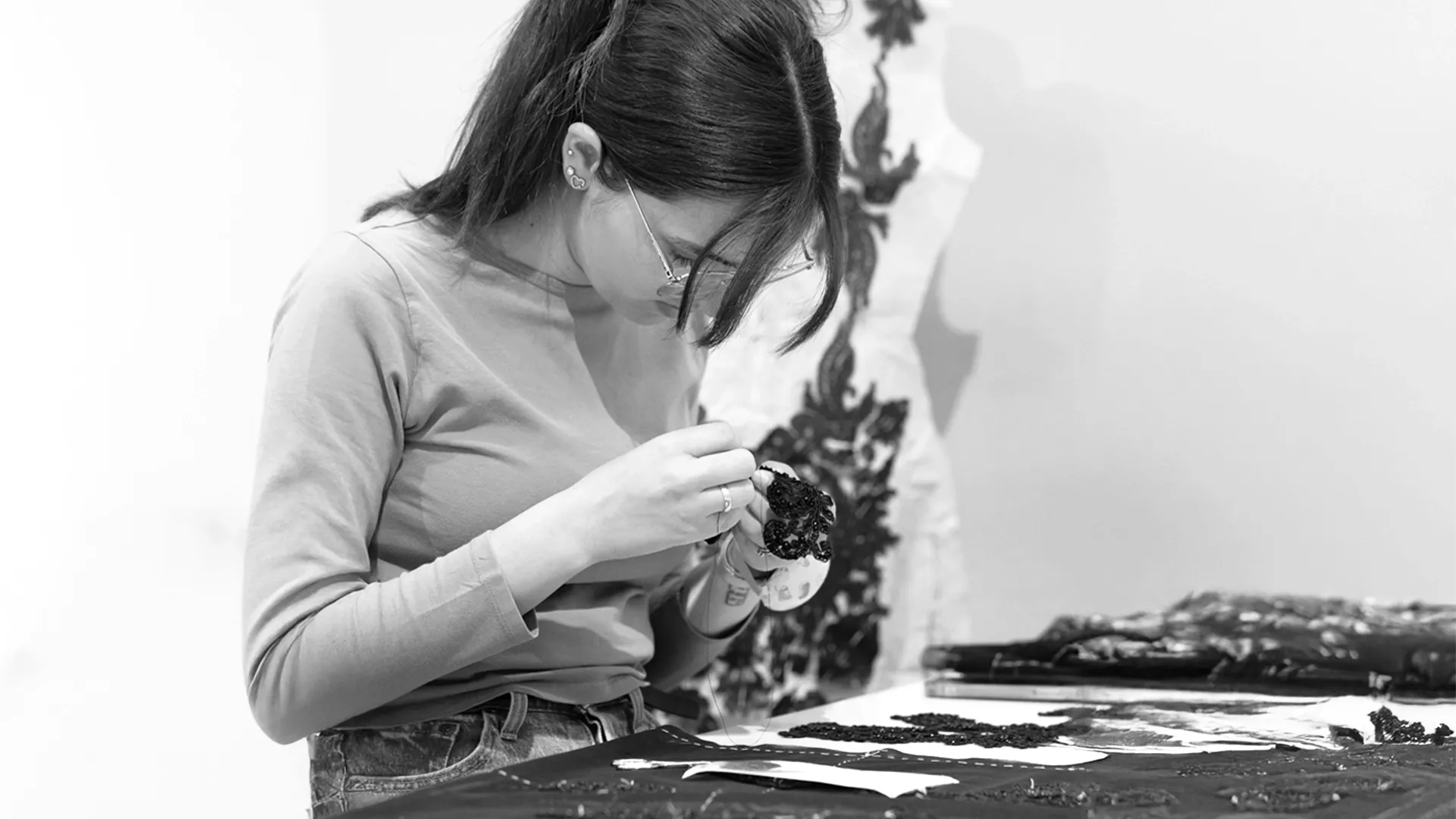
Italy is a synonym for wonder, especially for new generations living abroad who wish to discover the culture and educational system that “Il Bel Paese” can offer.
The Foundation Year is designed for students attracted by Made in Italy, understood not only as a sign of distinction and style, but also as a qualitative approach to life.
It is precisely within this context that the Foundation Courses of the PLENA Education Group, of which RUFA is a part, fit in: 60-credit supplementary courses designed to introduce students to cultural, design, historical and artistic disciplines, as well as food and wine culture and hospitality, which they will explore in greater depth in the years to come.
Thanks to this educational path, international students with 11 years of schooling, students who attended an American High School but did not achieve the APs required to enter BA programmes in Italy, or students who attended a British High School but did not achieve the number of A-Levels required to enter BA programmes in Italy, will be able to meet the minimum requirements set by the Ministry of University and Research before accessing the university system, while acquiring the basic knowledge required in the artistic, audiovisual, multimedia and design fields.
The programmes are tailored for international applicants who need to complete entry requirements for the Italian university system. They are particularly suitable for:
- students who have completed 11 years of schooling;
- graduates from American high schools lacking the necessary AP credits;
- graduates from British systems without the required number of A-Levels;
- students who, although they are eligible to enrol directly on university courses in Italy, prefer to follow a program designed to introduce them to Italian culture.
- To introduce students to cultural, design, historical, culinary, and artistic subjects, as well as to the educational methodologies of the Italian university system.
- To fulfill the academic requirements of the Ministry of Education and Research for admission to BA programs in Italy.
Foundation Courses enable participants to build the foundations to undertake any Bachelor of Arts program. In this context, students can put themselves to the test, improve their language knowledge, get to know a National academic excellence and create professional relationships with the lecturers.
DIFFERENCES BETWEEN THE TRAINING OFFERING OF ROME, MILAN AND BRESCIA

ROME
RUFA – Rome University of Fine Arts
Saint louis College of Music
The language certificate obtained will be CILS.
Fields of study
1. Art, Design and Photo/Video
2. Music

MILAN – Bodio Center Campus
Ferrari Fashion School
SPD – Scuola Politecnica di design
RUFA – Rome University of Fine Arts
Saint Louis College of Music
The language certification obtained will be PLIDA (Venue of the examination: Padua or Brescia).
Fields of study
1. Fashion, Design and Photo/Video
2. Music

BRESCIA
CAST – Italian Institute of Culinary Arts & Hospitality
CIELS
The language certification obtained will be PLIDA (Venue of the examination: Padua or Brescia).
Fields of study
1. Italian Hospitality, Gastronomy & Food Culture
COURSES STUDY PLANS
FIVE MAIN SUBJECTS
Italian language and culture, writing workshop, history of art, design and Italian style, specific course in photography, video, art and design.
The course starts on 26 October and ends in July. The 60 credits obtained will allow access to first-level academic courses at RUFA without having to take the entrance examination, or at any other institution (considering the general rule of the teaching and decision-making autonomy of each individual educational entity), and may not be recognised for the purposes of reducing the teaching load of subsequent degree programmes.
Discover the study Plan
| Subject | Subject Type | Credits | Hours of lessons | Attendance method | Privacy / Proficiency | ||
|---|---|---|---|---|---|---|---|
| Rome | Milan | Rome | Milan | ||||
| Italian language and culture Certificate released: CILS | |||||||
| Language | T | 24 | 24 | 144 | 144 | on line/in person | EXAM |
| Culture | T | 12 | 12 | 72 | 72 | in person | EXAM |
| Specific Curriculum | |||||||
| History of art, design and italian style | T | 8 | 8 | 60 | 60 | in person | EXAM |
| Art | TP | 4 | / | 50 | / | in person | EXAM |
| Fashion Design | TP | / | 4 | / | 50 | in person | EXAM |
| Photo/video | TP | 4 | 4 | 50 | 50 | in person | EXAM |
| Basic Design | TP | 4 | 4 | 50 | 50 | in person | EXAM |
| Writing Lab | TP | 4 | 4 | 50 | 50 | in person | EXAM |
| Total | 60 | 60 | 476 | 476 | |||
(T) = Theoretical subjects – (TP) = Theoretical/practical subjects
(Rome) = Foundation Course in Rome – (Milan) = Foundation Course in Milan
The RUFA Foundation Course comprises language, culture and writing lessons in Italian, and more purely artistic RUFA lessons held in English. To be admitted, students must have a certified level of English language knowledge of B1/B2. As far as knowledge of the Italian language is concerned, it is preferable, but not compulsory, to already possess a B1 level.
General Information
Period: from 26 October 2026 to July 2027
Language: Italian and English
Language Requirements: English level B1/B2 of English.
Enrolment deadline: 24 October
Cost: € 8,500
Italian language and culture, songwriting and creative writing, history of music and Italian style, music theory and ear training, music production, and specialist studies in sound engineering, electronic music, composition, applied music, jazz and pop.
The course starts at the end of October and ends in July. The Saint Louis Foundation Course combines Italian language, culture and humanities studies with intensive musical training, allowing students to develop academic, linguistic and artistic competencies simultaneously throughout the programme. While the language and humanities modules contribute to the achievement of the academic requirements needed for access to Bachelor’s degree programmes in Italy, the music curriculum provides between 300 and 400 hours of specialised training, depending on the chosen pathway. Through a combination of theoretical instruction, practical workshops and project-based learning, students acquire the technical, creative and methodological skills required to successfully undertake the admission examinations for Saint Louis First-Level Academic Programmes.
Three dedicated curricula are available:
Sound Engineering & Electronic Music
Designed for students interested in audio technologies, sound design and digital music production. This pathway provides the foundations required for direct admission to the Saint Louis First-Level Academic Programmes in Sound Engineering (Tecnico del Suono) and Electronic Music (Musica Elettronica).
| Subject | Subject Type | Credits | Hours of lessons | Attendance method | Proficiency |
|---|---|---|---|---|---|
| Italian language and culture Certificate released: CILS | |||||
| Language | T | 24 | 144 | on line | EXAM |
| Culture | T | 12 | 72 | Dato 2.5 | Dato 2.6 |
| Specific Curriculum | |||||
| Sound Engineering | TP | 6 | 120 | in person | EXAM |
| Music Technology | TP | 6 | 120 | in person | EXAM |
| Acoustics | T | 4 | 60 | in person | EXAM |
| Music Theory & Harmony | TP | 4 | 60 | in person | EXAM |
| Live electronics | TP | 4 | 30 | in person | EXAM |
| Total | 60 | 476 | |||
Composition & Applied Music
Focused on composition techniques, orchestration, music production and music for visual media. The programme offers direct access to the Saint Louis First-Level Academic Programmes in Composition and Applied Music, with a particular emphasis on skills and methodologies related to film scoring and audiovisual production.
| Subject | Subject Type | Credits | Hours of lessons | Attendance method | Proficiency |
|---|---|---|---|---|---|
| Italian language and culture Certificate released: CILS | |||||
| Language | T | 24 | 144 | on line | EXAM |
| Culture | T | 12 | 72 | on line | EXAM |
| Specific Curriculum | |||||
| Music Theory & Harmony | TP | 6 | 60 | in person | EXAM |
| Composition | TP | 3 | 32 | in person | EXAM |
| Counterpoint | TP | 3 | 32 | in person | EXAM |
| Applied Music | P | 4 | 48 | in person | EXAM |
| Pianoforte complementare | P | 3 | 32 | in person | EXAM |
| Orchestrazione | T | 2 | 32 | in person | EXAM |
| Ear Training | T | 3 | 34 | in person | EXAM |
| Music Technology | TP | 2 | 48 | in person | EXAM |
| Total | 60 | 476 | |||
Jazz & Pop
Designed for aspiring performers, songwriters and contemporary musicians, this pathway develops instrumental, rhythmic and ensemble skills within modern music languages. Students may progress directly to Saint Louis First-Level Academic Programmes or enter the most advanced levels of the institution’s Pre-Academic Courses, according to their artistic profile and achieved competencies.
| Subject | Subject Type | Credits | Hours of lessons | Attendance method | Proficiency |
|---|---|---|---|---|---|
| Italian language and culture Certificate released: CILS | |||||
| Language | T | 24 | 144 | on line | EXAM |
| Culture | T | 12 | 72 | on line | EXAM |
| Specific Curriculum | |||||
| Instrument or vocal | P | 4 | 30 | in person | EXAM |
| Small Ensemble | P | 3 | 34 | in person | EXAM |
| Music Theory & Harmony | TP | 4 | 60 | in person | EXAM |
| Ear Training | T | 3 | 34 | in person | EXAM |
| Pianoforte complementare | P | 3 | 32 | in person | EXAM |
| Ensamble | P | 2 | 45 | in person | EXAM |
| Music Technology | TP | 2 | 48 | in person | EXAM |
| Rhythm Section | P | 2 | 20 | in person | EXAM |
| Improvisation | TP | 2 | 40 | in person | EXAM |
| Total | 60 | 476 | |||
The Saint Louis Foundation Course comprises language, culture and writing lessons in Italian, alongside music-specific theoretical and practical activities delivered in English. To be admitted, students must have a certified level of English language knowledge of B1/B2. As far as knowledge of the Italian language is concerned, it is preferable, but not compulsory, to already possess a B1 level.
General Information
Period: from 26 October 2026 to July 2027
Language: Italian and English
Language Requirements: English level B1/B2 of English.
Enrolment deadline: 24 October
Cost: € 8,500
The course starts at the end of October and ends in July. The 60 credits obtained will allow access to CAST Bachelor in Culinary Arts & Hospitality Management without having to take the entrance examination, or at any other institution (considering the general rule of the teaching and decision-making autonomy of each individual educational entity), and may not be recognised for the purposes of reducing the teaching load of subsequent degree programmes.
| Subject | Subject Type | Credits | Hours of lessons | Attendance method | Proficiency |
|---|---|---|---|---|---|
| Italian language and culture Certificate released: CILS | |||||
| Language | T | 24 | 144 | on line | EXAM |
| Culture | T | 12 | 72 | on line | EXAM |
| Specific Curriculum | |||||
| Italian Culture of Hospitality | TP | 8 | 100 | in person | EXAM |
| Italian Ingredients, Products & Food Supply Chains | TP | 16 | 160 | in person | EXAM |
| Total | 60 | 476 | |||
The CAST Foundation Course comprises language, culture and writing lessons in Italian, and practical lessons held in English. To be admitted, students must have a certified level of English language knowledge of B1/B2. As far as knowledge of the Italian language is concerned, it is preferable, but not compulsory, to already possess a B1 level.
General Information
Period: from 26 October 2026 to July 2027
Language: Italian and English
Language Requirements: English level B1/B2 of English.
Enrolment deadline: 24 October
Cost: € 8,500
Variabil Study Plans
The programmes include 476 hours of study in total. The 60 credits obtained will allow students to be admitted to Bachelor Programmes of the academies where they will attend the Foundation course – or BA programmes in any other Institution, keeping in mind the general rule regarding the educational and decision-making independence of all Higher Education Institutions regarding admissions – and will not be recognised for the purposes of reducing the teaching load of subsequent Degree programmes.
Please note
All higher education institutions have autonomy in managing admissions. Attendance on the Foundation Year does not exempt students from sitting any entrance examinations at third-party institutions and cannot, under any circumstances, be recognised for the purpose of reducing the academic workload in subsequent degree programmes.